If you operate an SMM panel, IPTV service, replica store, or any business that mainstream processors consider “restricted,” you already know the pattern. Your account gets flagged. Funds freeze. You scramble for a replacement.
In 2026, that pattern is getting worse, not because your business changed, but because Mastercard changed the rules.
The Shift from Fraud Detection to Trust Monitoring
Effective July 24, 2026, Mastercard introduced a revised Scam Merchant Monitoring program that fundamentally changes how acquirers and payment facilitators evaluate merchants. The old model asked one question: Has this merchant already caused harm?
The new model asks a different question: Can this merchant be trusted before significant harm occurs?
This is a structural shift. Mastercard now requires acquirers to investigate merchants exhibiting specific scam-related risk signals within 72 hours. If the investigation confirms scam activity, Mastercard and Maestro processing must be terminated immediately.
The Triggers That Will Flag Your Account
Mastercard defined several investigation triggers that acquirers must act on:
For all merchants:
-
- Authorization approval rate drops by 50 percentage points (e.g., 95% to 45%) or falls below 30% over a 72-hour period with at least 25 transactions
- Receipt of a GRIP letter (Global Rules Investigation Program)
- A Merchant Monitoring Service Provider (MMSP) alert identifying the merchant as a potential scam operator
For merchants with less than 6 months of Mastercard acceptance history:
-
- Two different issuers reporting Fraud Type 56 (Manipulation of Cardholder)
- Two different issuers initiating chargebacks with documentation mentioning scams
- Combined refund and chargeback rate exceeding 5% of purchase transactions over a rolling 30-day period (with at least 500 transactions)
That last trigger is the one that catches legitimate businesses.
Why Your Legitimate Business Looks Like a Scam
Here’s the uncomfortable truth: the signals Mastercard uses to identify scams are the same signals that appear in fast-growing legitimate businesses.
Consider your business model:
Recurring billing and subscriptions generate more disputes than one-time retail sales. Customers forget renewals. Cards expire. Cancellation flows confuse people. Each of these creates friction that looks statistically similar to a scam operation.
Rapid growth triggers alarms. When you launch a new product line, run a promotion, or expand into a new market, your volume spikes. To an automated risk system, a sudden volume increase looks like either fraud or an unsustainable operation about to collapse.
High refund rates can indicate poor product quality, or they can indicate a business that prioritizes customer satisfaction and issues refunds proactively. The risk model doesn’t know the difference.
Digital delivery creates “product not received” disputes because there’s no tracking number. Even when you have IP logs and download records, the absence of physical fulfillment documentation makes disputes harder to win.
None of these mean your business is fraudulent. But they light up the same dashboards designed to catch scammers.
What Happens When You Get Flagged
The investigation process itself is costly, even if you’re cleared.
Your acquirer must respond within 72 hours. They’ll request documentation: fulfillment records, customer communication logs, refund policies, transaction evidence. If you can’t produce these quickly, the investigation may not resolve in your favor.
If cleared: Processing continues, but you remain under ongoing monitoring. A cleared investigation is not free, it consumes time, documentation, and acquirer attention. Repeated flags, even repeatedly cleared flags, change the relationship.
If confirmed as a scam: Mastercard and Maestro processing stops immediately. For most high-risk businesses, that means losing 30-40% of revenue overnight.
The New Merchant Penalty
Mastercard’s update applies heightened scrutiny to merchants with less than six months of Mastercard acceptance history.
This creates a structural disadvantage for:
-
- New businesses launching their first merchant account
- Established businesses opening new MIDs in different regions
- Businesses that switch processors and start fresh with each new provider
The six-month window is deliberate. Scam operations typically open accounts, process transactions for a short period, and disappear before complaints mature into chargeback patterns. Mastercard is catching them early, but catching legitimate new merchants in the same net.
How Payment Routing Mitigates the Risk
You cannot change how Mastercard evaluates risk. But you can change how your payments flow through the system.
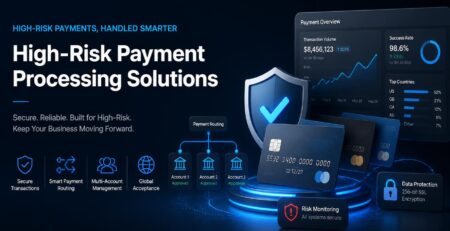
Multi-account distribution spreads transaction volume across multiple merchant accounts. Instead of one account absorbing 100% of your volume, and hitting trigger thresholds, you distribute the load. When one account approaches a threshold, routing shifts to another.
Descriptor management ensures that what appears on customer statements aligns with processor expectations. This isn’t about hiding your business. It’s about presenting transaction data in the format processors are designed to evaluate.
Account redundancy means a single freeze doesn’t wipe out your cash flow. If one account gets limited, the routing system automatically redirects transactions to others. Your revenue continues while you resolve the issue.
This is what payment orchestration does. It sits between your website and your processors, making intelligent decisions about where each transaction goes based on rules you define.
The Bottom Line
Mastercard’s Scam Merchant Monitoring isn’t about catching you. It’s about catching actual scammers before they cause harm. The problem is that legitimate high-risk businesses, SMM panels, IPTV services, replicas, peptides, look statistically similar to the fraudsters the system is designed to catch.
You can’t change your business model. But you can change how your payments flow.
Stealth Checkout provides payment routing and optimization for WooCommerce, PHP, and custom websites. Connect multiple payment accounts, manage transaction descriptors, and keep your revenue flowing even when one account gets flagged.