You wake up to an email from Stripe. Your account is under review. Funds are frozen for 90 days. No warning. No explanation. Just a generic message about “unusual activity” that doesn’t apply to your business.
You sell social media engagement. Your customers pay willingly. You deliver what you promise. Yet every few months, your payment processor treats you like a fraudster.
This isn’t bad luck. It’s a structural problem with how traditional processors evaluate SMM panels. And in 2026, it’s getting worse.
Mastercard’s Scam Merchant Monitoring program now requires acquirers to investigate flagged merchants within 72 hours. Visa’s VAMP thresholds tightened in April 2026. The algorithms are faster, the thresholds are lower, and SMM panels — with their high transaction volume and low ticket sizes — are squarely in the crosshairs.
This guide covers everything you need to know about SMM panel payment processing in 2026: why traditional gateways fail, what triggers freezes, and how to build a payment infrastructure that keeps your revenue flowing regardless of what the algorithms decide.
Why Traditional Payment Processors Reject SMM Panels
Stripe, PayPal, and Square built their systems for predictable retail. A coffee shop sells a $4 latte. A clothing store sells a $40 shirt. Transaction patterns are simple, chargeback ratios are low, and underwriting algorithms process thousands of merchants without human intervention.
SMM panels don’t fit that model.
The Volume Problem
An SMM panel processing 50,000 micro-transactions monthly has 50,000 opportunities for a dispute to enter the chargeback numerator. A furniture store processing 500 orders has 500. Visa’s VAMP ratio is count-based, not dollar-based. That means your $2 Instagram followers order carries the same weight as a $2,000 furniture purchase when calculating your dispute ratio.
The math is brutal. One disputed $5 transaction affects your ratio 100 times more than a $500 dispute would affect a traditional retailer.
The Delivery Problem
Digital delivery creates “product not received” disputes because there’s no tracking number. Even when you have IP logs, delivery confirmation, and timestamped records, the absence of physical fulfillment documentation makes disputes harder to win.
Traditional processors see this pattern and do one of three things:
-
- Decline the account at onboarding
- Freeze funds after a chargeback spike
- Terminate without warning when volume crosses an internal threshold
None of these outcomes are based on whether your business is legitimate. They’re based on whether your transaction patterns match the baseline the algorithm was trained on. SMM panels never do.
What Triggers an SMM Panel Account Freeze in 2026
Understanding the triggers is the first step to avoiding them. Here are the specific events that put your account at risk.
Mastercard’s 72-Hour Investigation Triggers
Effective July 24, 2026, Mastercard requires acquirers to investigate merchants exhibiting specific scam-related risk signals within 72 hours. For merchants with less than six months of Mastercard acceptance history, these triggers include:
-
- Two different issuers reporting Fraud Type 56 (Manipulation of Cardholder)
- Two different issuers initiating chargebacks with documentation mentioning scams
- Combined refund and chargeback rate exceeding 5% of purchase transactions over a rolling 30-day period (with at least 500 transactions)
That last trigger catches legitimate SMM panels. A 5% refund rate sounds high, but for a business processing thousands of micro-transactions, a few dissatisfied customers can push you over the line.
Visa VAMP Thresholds
Visa’s Acquirer Monitoring Program (VAMP) calculates your ratio using this formula:
(TC40 Fraud Reports + TC15 Disputes) ÷ TC05 Settled Transactions
Three details make this more punishing than it appears:
-
- Fraud and disputes are combined. A single disputed transaction can generate both a TC40 fraud report and a TC15 chargeback. That one transaction counts twice against your ratio.
- It’s count-based, not dollar-based. High-volume, low-ticket businesses face far more ratio exposure per dollar of revenue.
- Only card-not-present transactions count. If your business is digital-only, every transaction enters the denominator.
Visa’s merchant “Excessive” threshold is 1.5%. But your acquirer’s portfolio threshold is 0.50%. If your acquirer processes for thousands of merchants, your individual 1.2% ratio — technically compliant — pulls their portfolio average up. Acquirers are already terminating merchants with historically acceptable rates of 0.8% to 1.0%.
Rolling Reserves and MATCH List Risk
Even if your account survives, high-risk processors often require rolling reserves: 5 to 10% of transaction volume held for 90 to 180 days as a buffer against chargebacks. That’s capital you can’t use for operations, marketing, or inventory.
Worse, if your account gets terminated, you’re added to the MATCH list — a database that makes it significantly harder to open new accounts for five years.
The Real Cost of Payment Processing Instability
When your merchant account gets frozen, the damage goes beyond the immediate revenue loss.
Revenue Concentration Risk
If all your payments flow through a single account, one freeze wipes out your entire cash flow. SMM panels that survive in restricted verticals spread volume across multiple accounts specifically to avoid this single point of failure.
Account Termination Without Recourse
Traditional processors can close your account with minimal notice. Once terminated, you’re added to the MATCH list. Even if you find a new processor willing to work with you, the termination follows you.
The Compounding Effect
Every freeze costs you:
-
- Revenue during the freeze period
- Time spent finding a replacement processor
- Customer trust when checkout fails
- Momentum in a competitive market
A single freeze can set your business back six months. Two freezes in a year can kill it.
How SMM Panel Payment Gateways Solve the Structural Problem
The core issue isn’t that SMM panels are inherently fraudulent. It’s that traditional processors lack the infrastructure to evaluate them properly.
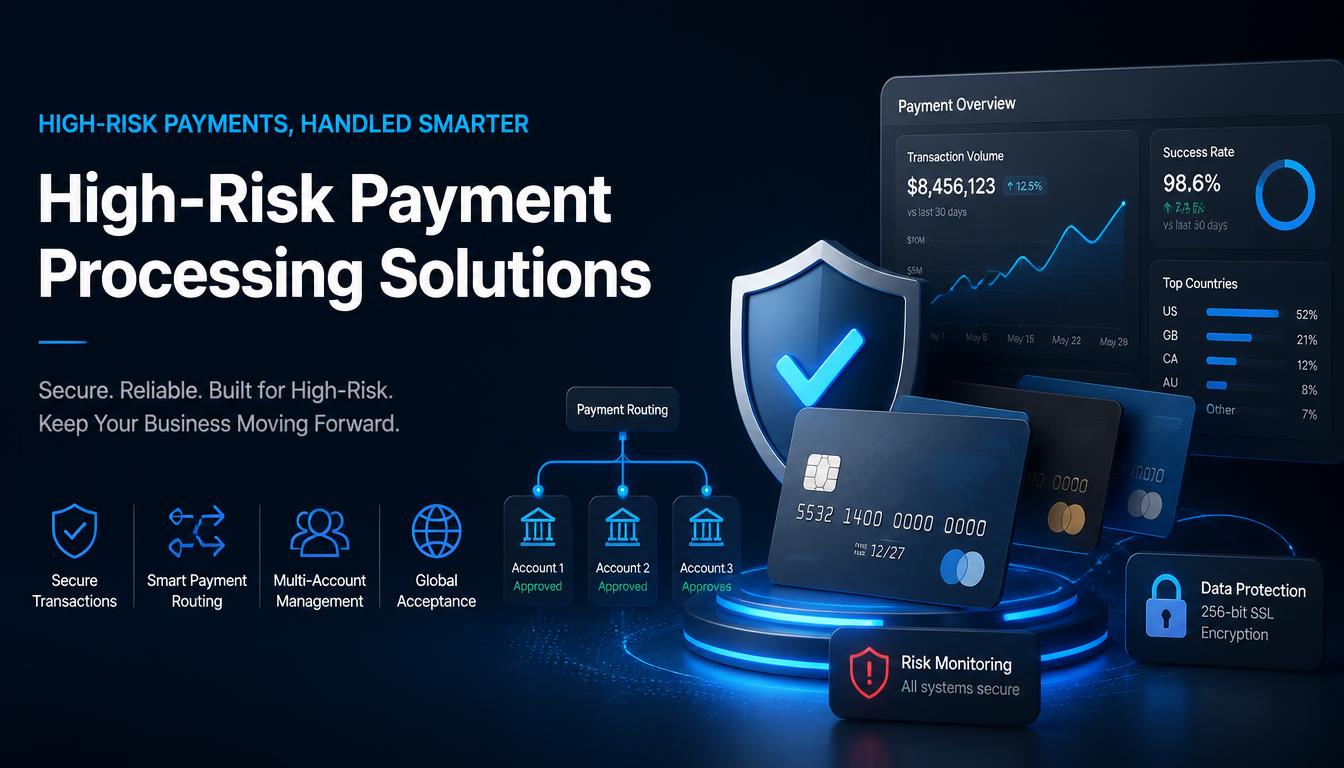
High-risk payment gateways built for SMM panels address this by sitting between your website and the payment processors. Instead of sending every transaction directly to a single gateway, the system routes payments through multiple accounts based on rules you define.
What a High-Risk Payment Gateway Actually Does
Volume distribution: Transactions spread across multiple merchant accounts, reducing the risk concentration that triggers automated freezes. When one account approaches a threshold, routing shifts to another.
Descriptor management: What appears on the customer’s statement can be standardized to align with processor expectations. This isn’t about hiding your business — it’s about presenting transaction data in the format processors are designed to evaluate.
Account redundancy: If one account gets limited, the system routes to others automatically. Your revenue stream continues while you resolve the issue.
Smart 2D/3D Secure routing: Accept 2D payments when risk is low for faster checkout. Trigger 3D Secure only when needed — based on card type, transaction amount, and bank rules. This balances security with conversion optimization.
Why This Matters for SMM Panels Specifically
SMM panels process high volumes of small transactions. Traditional gateways see this pattern and flag it as unusual. A payment gateway built for blackhat businesses understands that this is simply how your business model works.
The gateway doesn’t judge your business. It optimizes how your transactions flow through the system.
Payment Routing for WooCommerce and Perfect Panel Sites
If you run your SMM panel on WooCommerce or Perfect Panel, you have specific integration options.
WooCommerce High-Risk Payment Solutions
WooCommerce powers a significant percentage of SMM panels. The platform is flexible, but its default payment gateways — Stripe, PayPal — aren’t built for high-risk businesses.
A WooCommerce high-risk payment solution connects your store to multiple payment accounts through a single integration. You keep your existing checkout flow. The routing happens behind the scenes.
Perfect Panel Payment Gateway Integration
Perfect Panel is purpose-built for SMM panels. It handles order management, service delivery, and customer accounts. What it doesn’t handle well is payment processing for restricted businesses.
Integrating a high-risk payment gateway with Perfect Panel lets you:
-
- Accept payments through multiple accounts
- Distribute transaction volume automatically
- Maintain consistent checkout experience for customers
- Avoid single-account dependency
PHP Payment Routing Integration
If you’ve built a custom SMM panel in PHP, you need an API that serves as an open bridge between your site and multiple payment processors.
The integration should support:
-
- Multiple gateway connections
- Rule-based routing logic
- Automatic failover when an account gets limited
- Transaction reporting and reconciliation
How Stealth Checkout Solves SMM Panel Payment Processing
Stealth Checkout was built specifically for businesses that mainstream processors reject. Here’s how it works for SMM panels.
Smart Transaction Optimization
Your SMM panel services — Instagram followers, YouTube views, TikTok engagement — are processed through intelligent routing algorithms that present transaction data in a standardized format. Payment gateways receive clear, compliant information that aligns with their expected parameters, reducing the likelihood of unnecessary flags or holds.
Multi-Account Management
Connect multiple payment accounts to your Stealth Checkout dashboard. The system intelligently distributes transaction volume across your connected accounts, helping you maintain consistent payment flow while minimizing account-specific risk.
If one account gets limited, the system routes to others automatically. Your revenue continues while you resolve the issue.
Receipt Privacy
Stealth Checkout hides product names from PayPal and Stripe receipts, replacing them with your WooCommerce order ID (for example: Order #12345). Product images and other identifying details are also concealed. Your customers get a valid receipt without revealing what they purchased.
Open Integration Framework
Already using a custom processor, crypto wallet, or local banking solution? Stealth Checkout’s API serves as an open bridge, allowing seamless integration with your existing payment infrastructure. The routing matrix adapts to support virtually any payment gateway you’re currently using.
Built for SMM Panels
Stealth Checkout understands SMM panel payment processing. We know:
-
- High transaction volume is normal for your business
- Micro-transactions require different risk evaluation
- Digital delivery creates unique dispute patterns
- Account redundancy isn’t optional — it’s essential
We don’t ask you to change your business model. We change how payment gateways interpret your transactions.
Building a Resilient SMM Panel Payment Infrastructure
Avoiding freezes isn’t about finding a loophole. It’s about building infrastructure that accounts for how high-risk payment processing actually works.
Step 1: Diversify Your Payment Accounts
Never rely on a single processor. Connect multiple accounts — Stripe, PayPal, and high-risk gateways — through a routing system that distributes volume automatically.
Step 2: Monitor Your Chargeback Ratio
Track your TC40 and TC15 numbers weekly. If you’re approaching 0.5%, take action before your acquirer does. Refund proactively when disputes arise. Use Rapid Dispute Resolution networks for eligible transactions.
Step 3: Document Everything
For every transaction, maintain:
-
- IP logs
- Delivery confirmation
- Customer communication records
- Refund and cancellation policies
When a dispute arises, you need evidence ready within the response deadline.
Step 4: Use a Payment Gateway Built for Blackhat Businesses
Traditional processors will always see SMM panels as liabilities. A payment gateway built for blackhat and grayhat businesses sees them as customers.
The difference isn’t legality. It’s infrastructure.
The Bottom Line
SMM panel payment processing doesn’t have to be a constant battle with frozen accounts and terminated services.
The problem isn’t your business model. It’s that traditional payment processors built their systems for retail storefronts, not digital entrepreneurs selling social media engagement.
High-risk payment gateways, payment routing for WooCommerce, and multi-account management solve the structural problem. They distribute volume, manage descriptors, and provide redundancy when one account gets flagged.
In 2026, with Mastercard’s 72-hour investigation window and Visa’s tighter VAMP thresholds, the stakes are higher than ever. But the solution exists.
You can’t change how card networks evaluate risk. You can change how your payments flow through the system.
Conclusion
If you’re tired of explaining your SMM panel business to processors that don’t understand it, and losing revenue every time an algorithm decides you’re too complicated, the solution isn’t to change what you sell. It’s to change how your payments flow.
Stealth Checkout provides payment routing and optimization for WooCommerce, PHP, and Perfect Panel websites. Connect multiple payment accounts, manage transaction descriptors, and keep your revenue flowing even when one account gets flagged.
Explore the plans. Test the sandbox. See if it fits your business.